
William Percy Rogers
William Percy Rogers
Written by C. Bryant and R.I. Sommerville.
William Percy Rogers was elected a Fellow of the Australian Academy of Science in 1954, and served as a member of the Council (1958-1960) and as Vice-President (1971-1973). He received a DSc from the University of London in 1956, and was a Fellow of the Institute of Biology (UK) and of the Australian Society for Parasitology, of which he served as president in 1966-1967. He was a member of the Australian National Research Council, of which he was a Fellow, and of five other National Committees. For fifteen years he was a member of the WHO Expert Committee on Parasitic Diseases. A member and for three years chairman of the Board of Standards of Journals of the Australian Academy of Science and CSIRO, he was also on the editorial boards of seven Australian and international journals. He was known affectionately as ‘Buddy’ by friends and colleagues, a nickname borrowed from a well known American actor of the early decades of the twentieth century, Charles ‘Buddy’ Rogers.
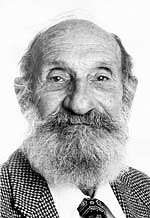
William (Buddy) Percy Rogers
Rogers was born on 23 November 1914 in Katanning, Western Australia. His father, Percy Nunn Rogers and his mother, Agnes Fanny Rogers (née Bishop), were both born in England. William Rogers was the last and, by eleven years, the youngest in a family of four children. The eldest was Dorothy, born in England on 10 October 1900; Leslie was born in Australia on 6 January 1902; and Gladys was born on 23 November 1903.
His father was a storekeeper who at various times ran general grocery stores in several West Australian country towns, including Meekatharra, Wickepin, Woodanilling and Katanning. He recalled his parents as ‘kind, generous people’, well-educated and well-read and possessing many books. His father’s favourite authors included Shakespeare, Emerson and Dickens. Rogers remembered this ‘because, an avid reader myself, my father’s choice of books surprised me. However, there was a wide choice of books in our house and I was allowed to buy lots myself.’ He retained a love of reading for the rest of his life. He also developed a lasting interest in field biology and became involved in amateur radio.
At the age of eleven it seems likely that his parents decided that he needed a better education than was available locally, so he was sent to school in Perth, where he lived in private lodgings. In 1927 he won an Entrance Scholarship for secondary education and attended Perth Modern School [2], from which he matriculated to the University of Western Australia [2] in 1933. Aided by a Commonwealth Bursary, he studied zoology, chemistry, physics and mathematics and obtained his BSc in 1936. The subsequent grant of a Commonwealth Post-graduate Scholarship enabled him to study for an MSc, which was awarded in 1938. His thesis was in parasitology and his supervisor was Dr H.W. (‘Bill’) Bennetts, who held degrees in veterinary science from the University of Melbourne and was the first veterinary pathologist in Western Australia’s Department of Agriculture. Highly respected for his understanding of both field and laboratory work, Bennetts was an important influence on Rogers’ early years, and parasitologists generally owe a great debt to him for introducing Rogers to the subject.
Two papers were published from Rogers’ thesis (1, 5). Here we see those qualities that are so much a hallmark of his research. The problems were defined with masterly clarity, special apparatus developed, and findings and conclusions expressed with precision and imagination. The paper (5) on the effect of the environment on availability of infective stages of parasites for sheep was and remains an outstanding contribution.
Rogers was awarded a Hackett Scholarship from the University of Western Australia to enrol for a PhD at the University of London in the School of Hygiene and Tropical Medicine. His supervisor was the distinguished parasitologist Professor R.T. Leiper, FRS, ‘who first encouraged me to undertake research work on the physiology of parasites’ (49). Rogers later wrote: ‘I doubt if I spoke to him about my work after the first week. But he did allow me to follow my own interests in research and to submit my thesis as a collection of papers or “galleys” which ranged from taxonomy…to physiology (2, 3, 4, 6, 7, 8, 9, 10, 11, 12) – looking back it seems terrible stuff’. Nowadays no supervisor could or would have so little involvement with a student. Yet Leiper recognized that Rogers was outstanding and suggested the general direction of his research. No doubt Rogers would have seen much more of his supervisor had his research floundered. Continue reading
FURTHER READING
William Percy Rogers – Research
International Journal for Parasitology
Board of Standards of Journals of the
Australian Academy of Science