
Althea Barber. Althea Barber. Althea Barber. Althea Barber. Althea Barber. Althea Barber. Althea Barber. Althea Barber. Althea Barber. Althea Barber.
GROWING UP IN KATANNING
Althea “Dorris” Barber was born in South Australia in 1896 where her family had a farm.
First came the mice plague.
“The mice ate their way into the flour box. They ate our clothes. They ate everything they could get to. They were ravenous. The cats hated them too. They were full up.. there were too many of them.”
Then came the rabbit plague. Then a terrible drought. But it was her mother’s ill health that finally drove the family to sell the farm and go West in 1903.
Dorris’s father went ahead with a team of horses and a cow. Tragically on the way one of the horses died “of seasickness” and the frightened cow fell over the side of the jetty in Albany and drowned.
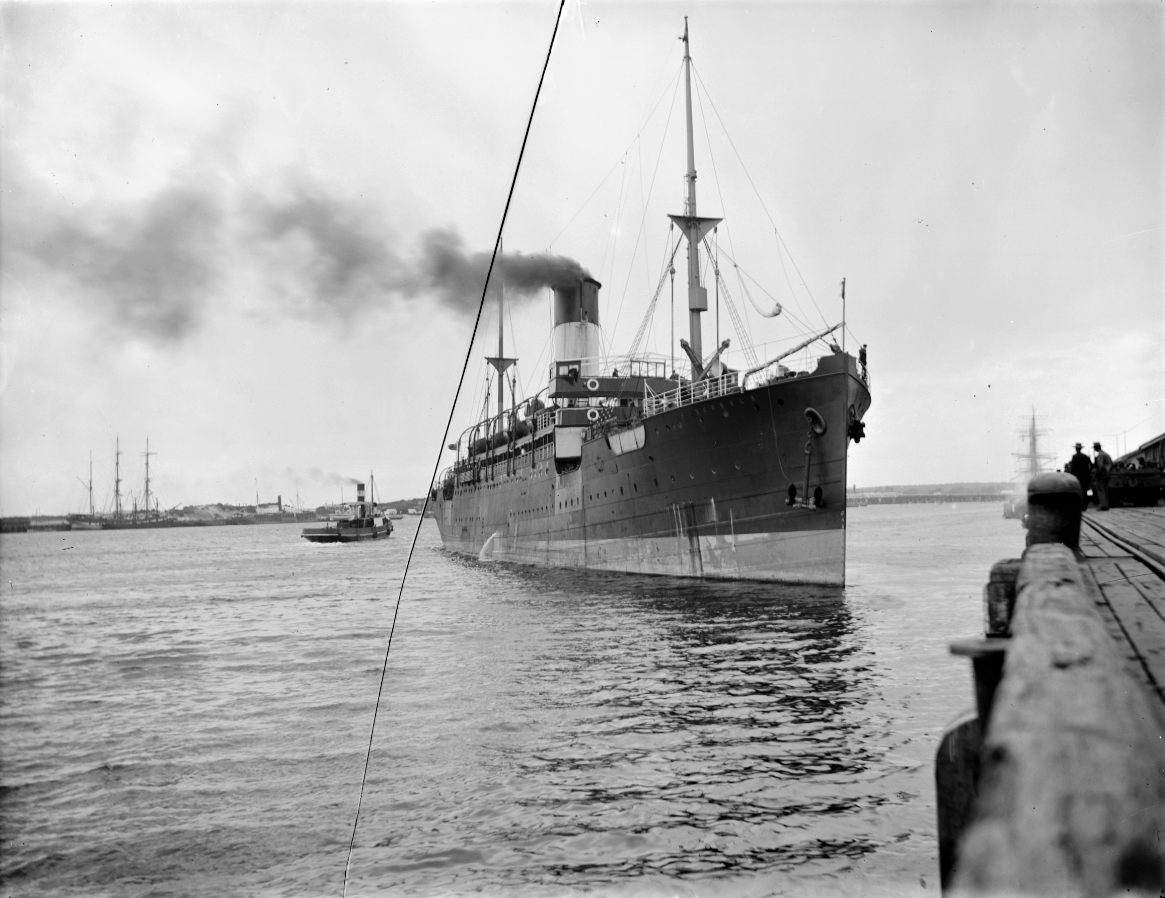
His family followed on the SS Bombala nine months later. After a five day voyage the family were reunited. It was “wonderful, wonderful” to get there. Even travelling first class had not spared them from suffering terrible sea sickness on the rough seas. They used to say in those days that if you could get across the Great Australian Bight without being seasick, you’d make a wonderful sailor.
The next day they took the eight-hour train trip to Katanning. A “slow old train”, its carriages were like “little dog boxes”, it’s seats hard and uncomfortable. As they journeyed into the night, the guard walked along the train’s roof lighting the kerosene lamps in the ceiling, but they were so dim that in most carriages passengers could barely see.
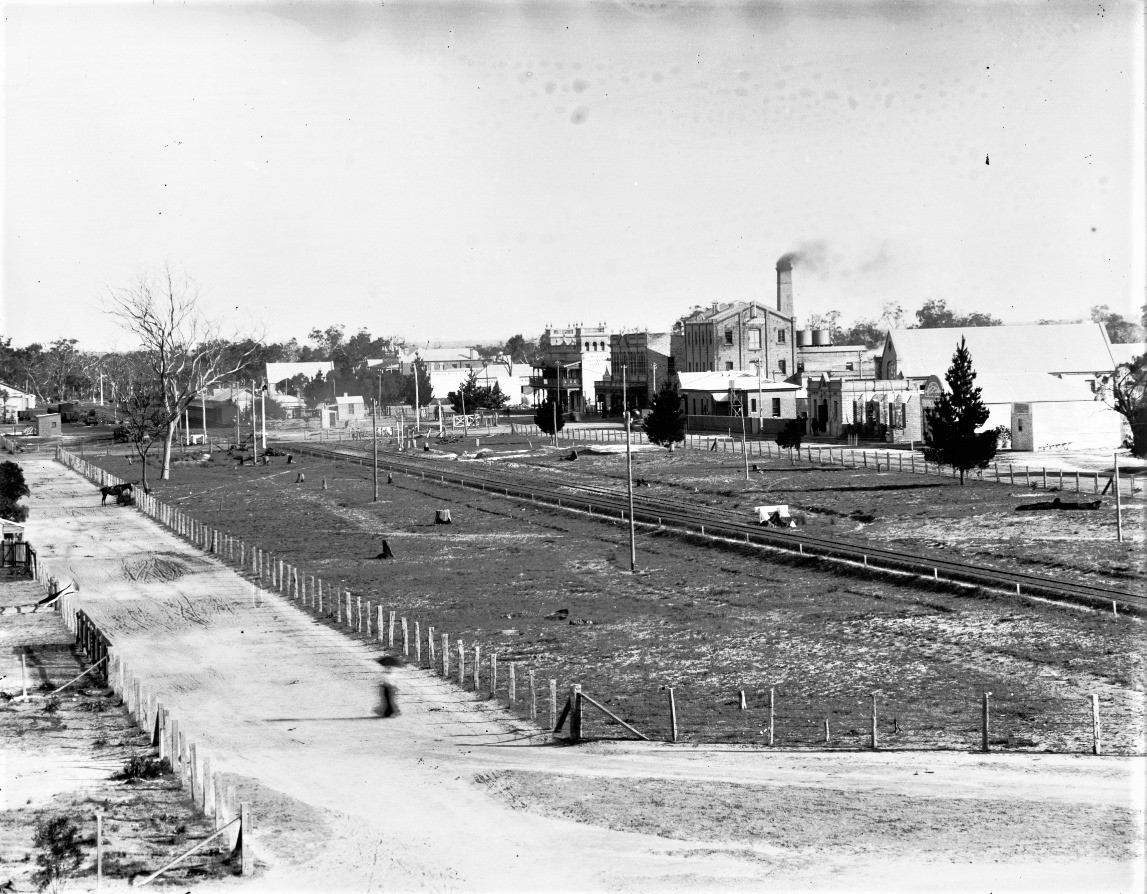
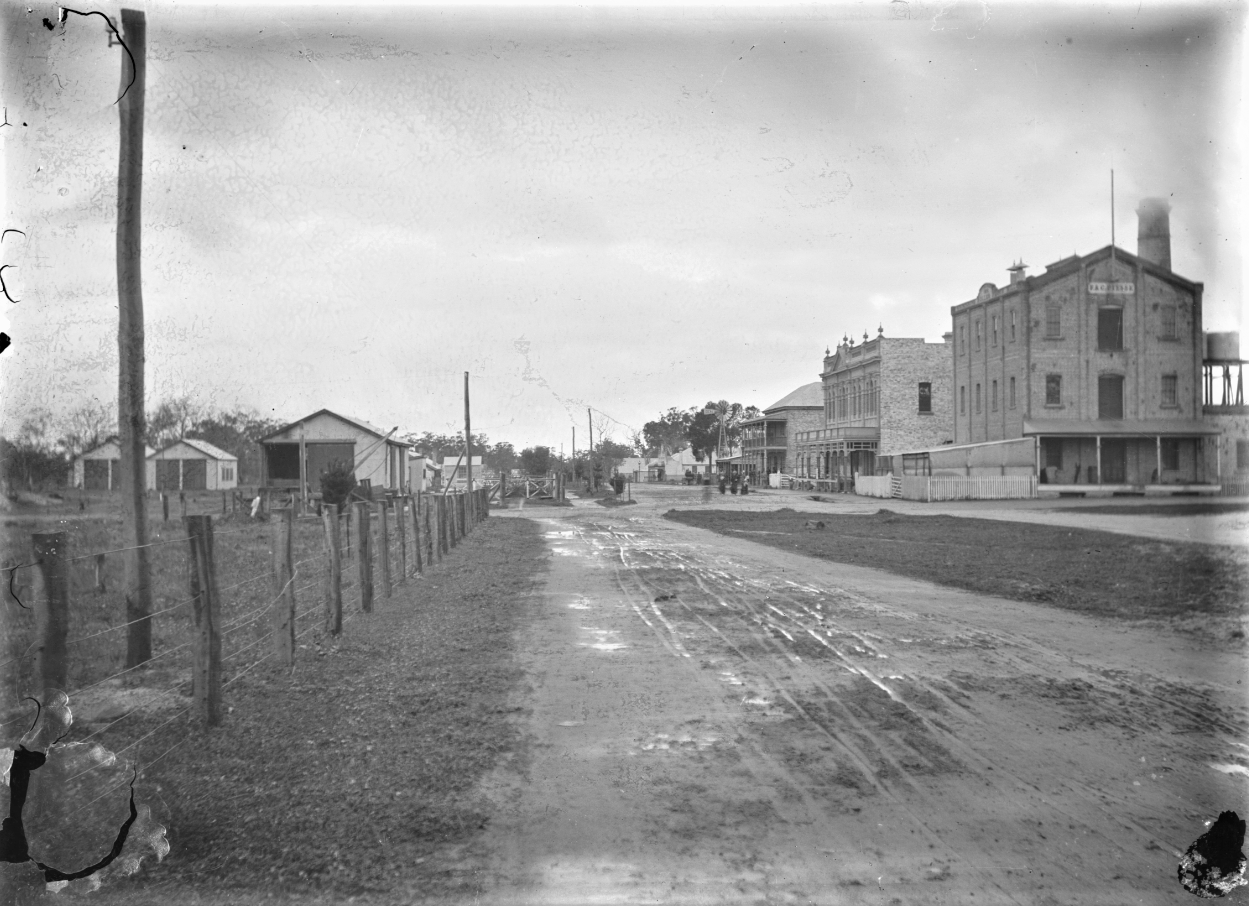
At last, the family arrived Ewlyamartup, nine miles out of Katanning. They were greeted by a temporary iron house lined with hessian, with a little galvanised water tank. Inside Dorris’s father had pinned beautiful everlastings onto the wall made into letters, big letters, saying “Welcome to” in pink and “WA” in yellow. The farm was on virgin land and Dorris loved it from the start. She would sometimes go out with a little tomahawk (miniature axe) and ringbark the sheoaks and little trees.
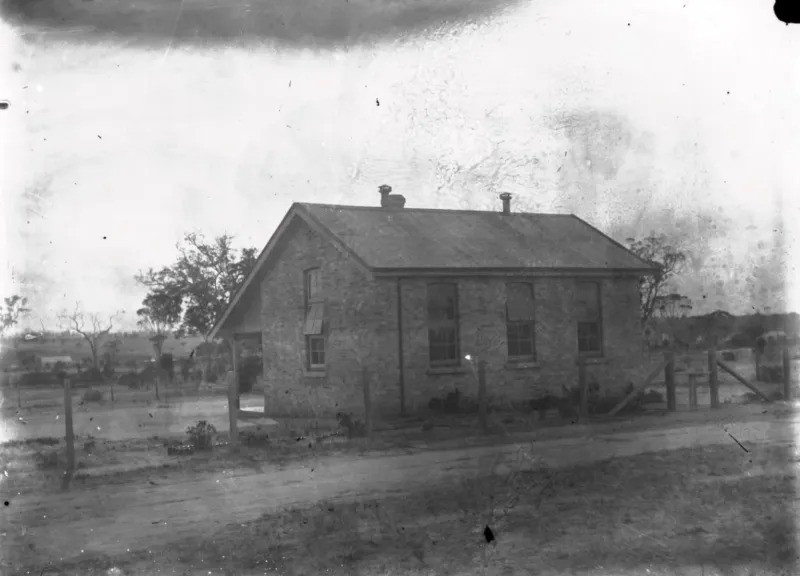
Dorris and her brother and sister attended the local school. To get there, they would walk up a little bush track hemmed with wildflowers, lovely trees and everlastings. Until then Dorris had never seen children going barefooted. While their mother would have not approved, Dorris thought it was wonderful and soon joined in. “As soon as we got out of sight, like kiddies do, we pulled off our shoes and stockings. Our feet got sore and dirty and everything, but Mother never seemed to find out. We’d leave our shoes and stockings under a tree and when we were coming home, we’d put them on again and wash our feet before going to bed.”
There were twelve children in her classroom (aged 7-14 years), including Aboriginal children. They played and studied happily together. Outside there was the whirligig (spinner) and games included houses, hopscotch and marbles. Inside they learnt to read, studied maps, had scripture lessons, did arithmetic, and spelling. Best of all there was no homework.
At lunch Dorris would take out her little square tin with painted violets on it. Inside would be a piece of cake, biscuits, fruit (if there was any fruit about) and sandwiches. “They were happy days.”


.
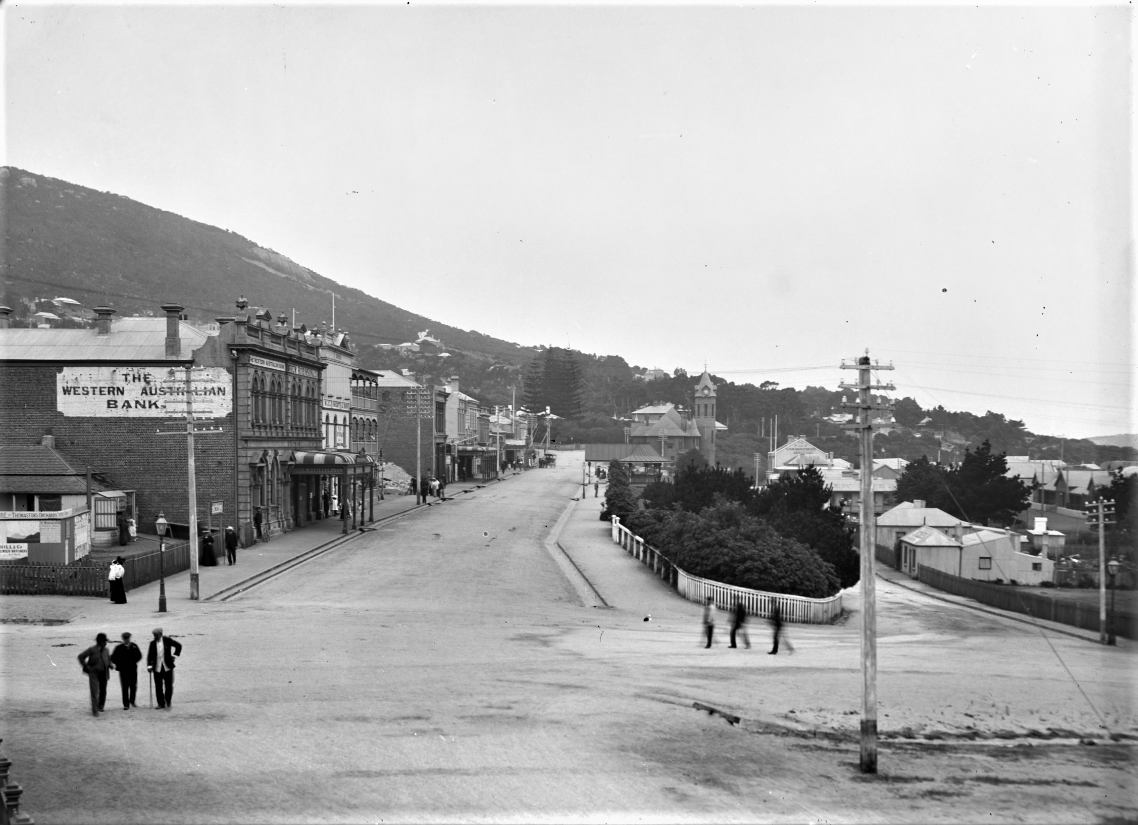
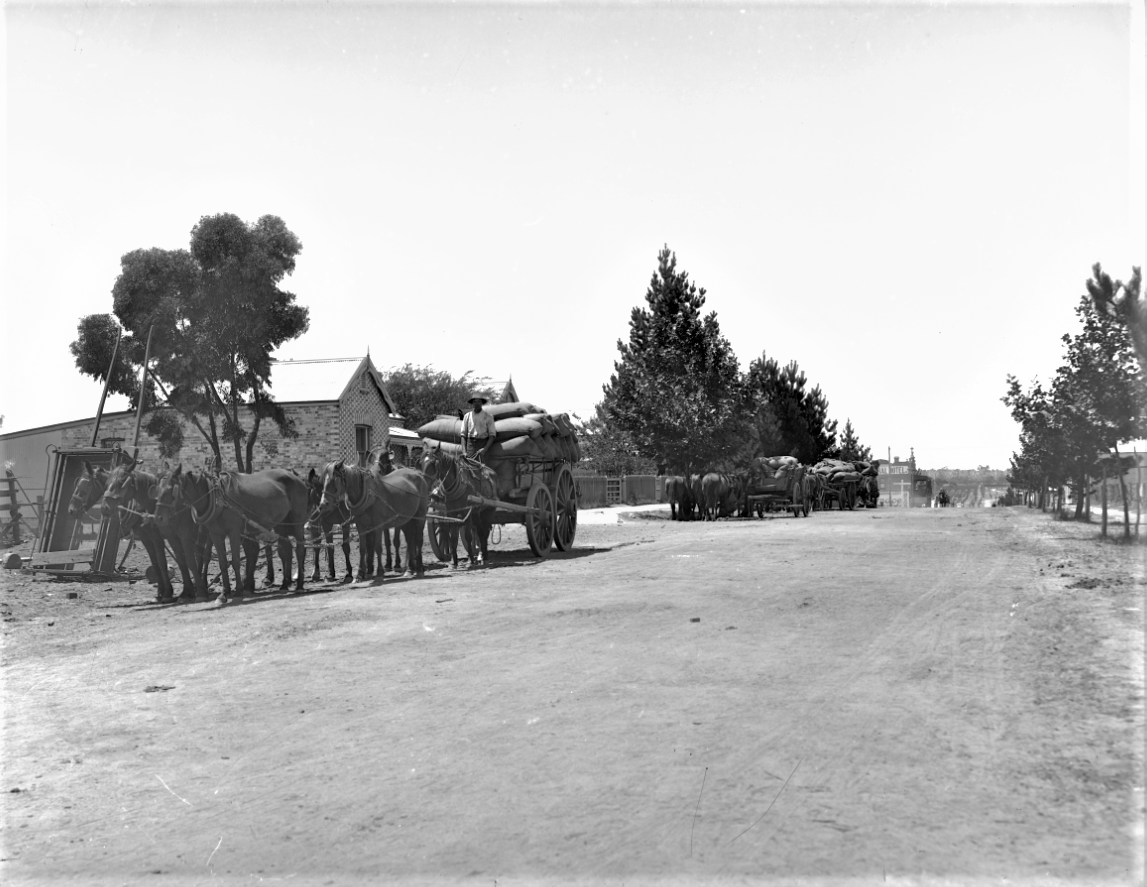
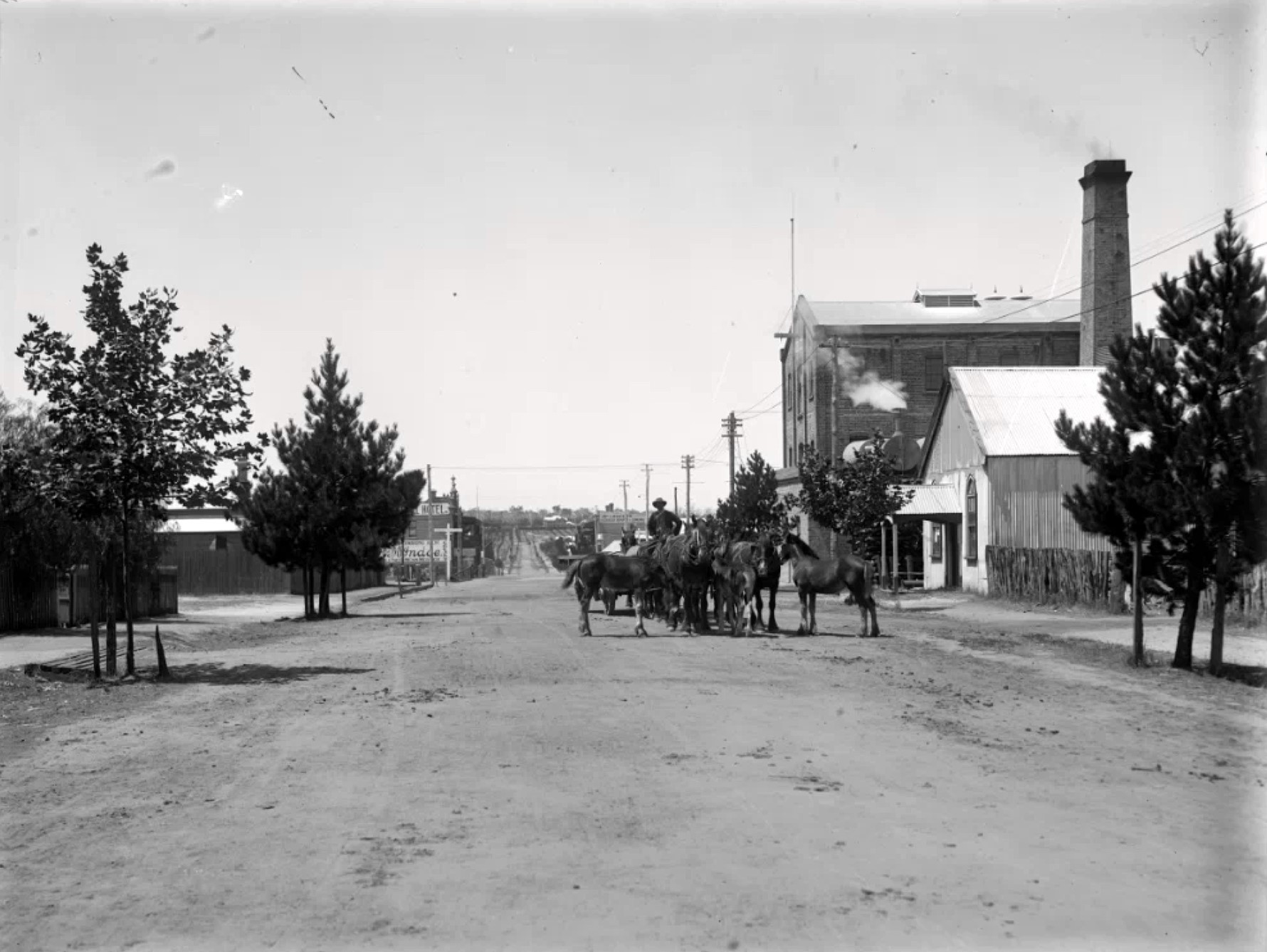
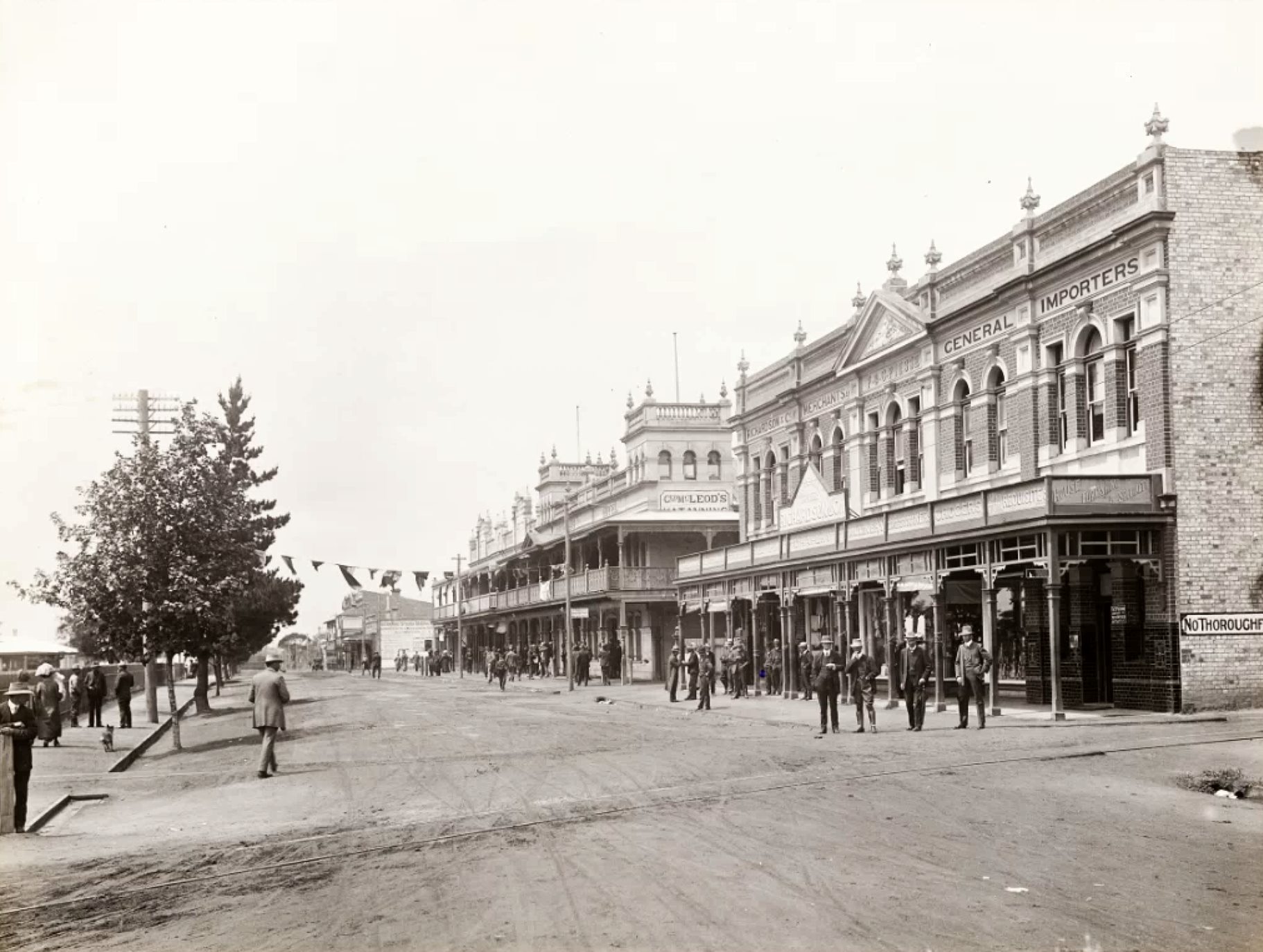
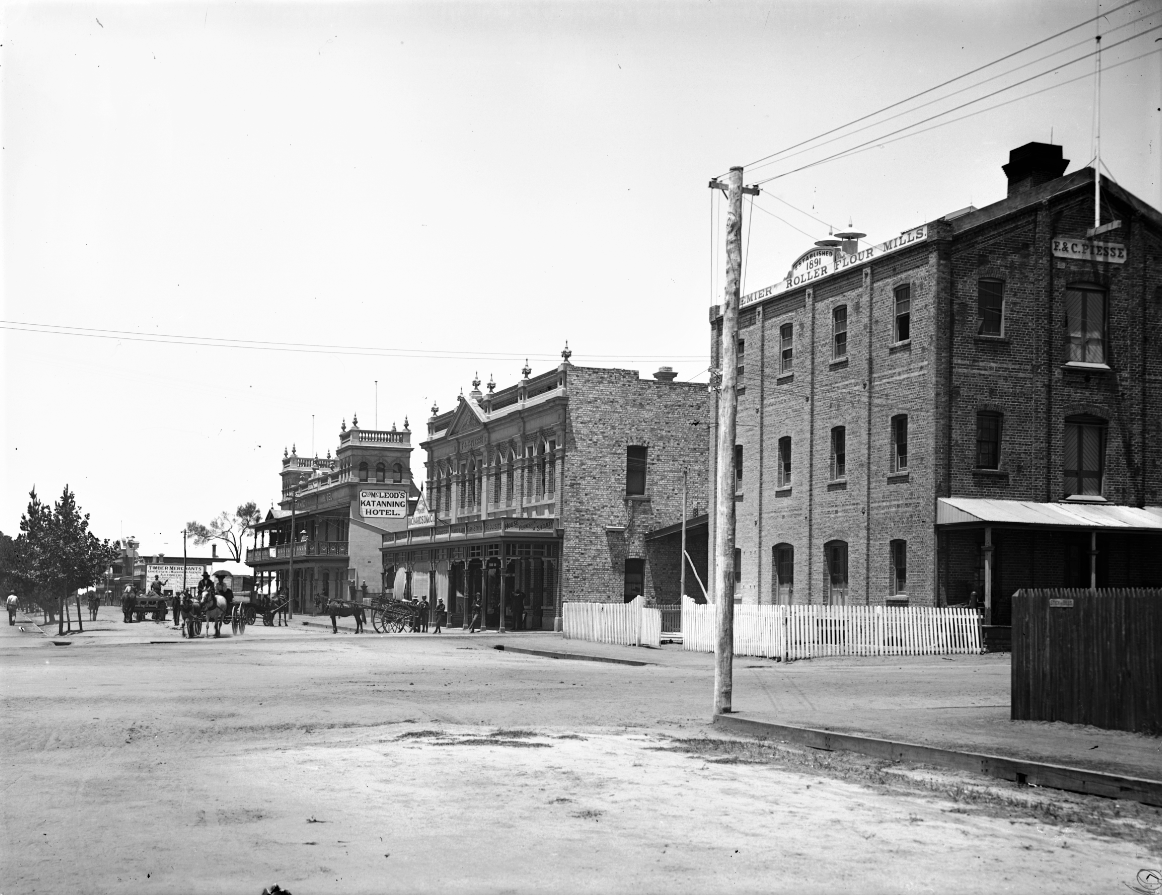
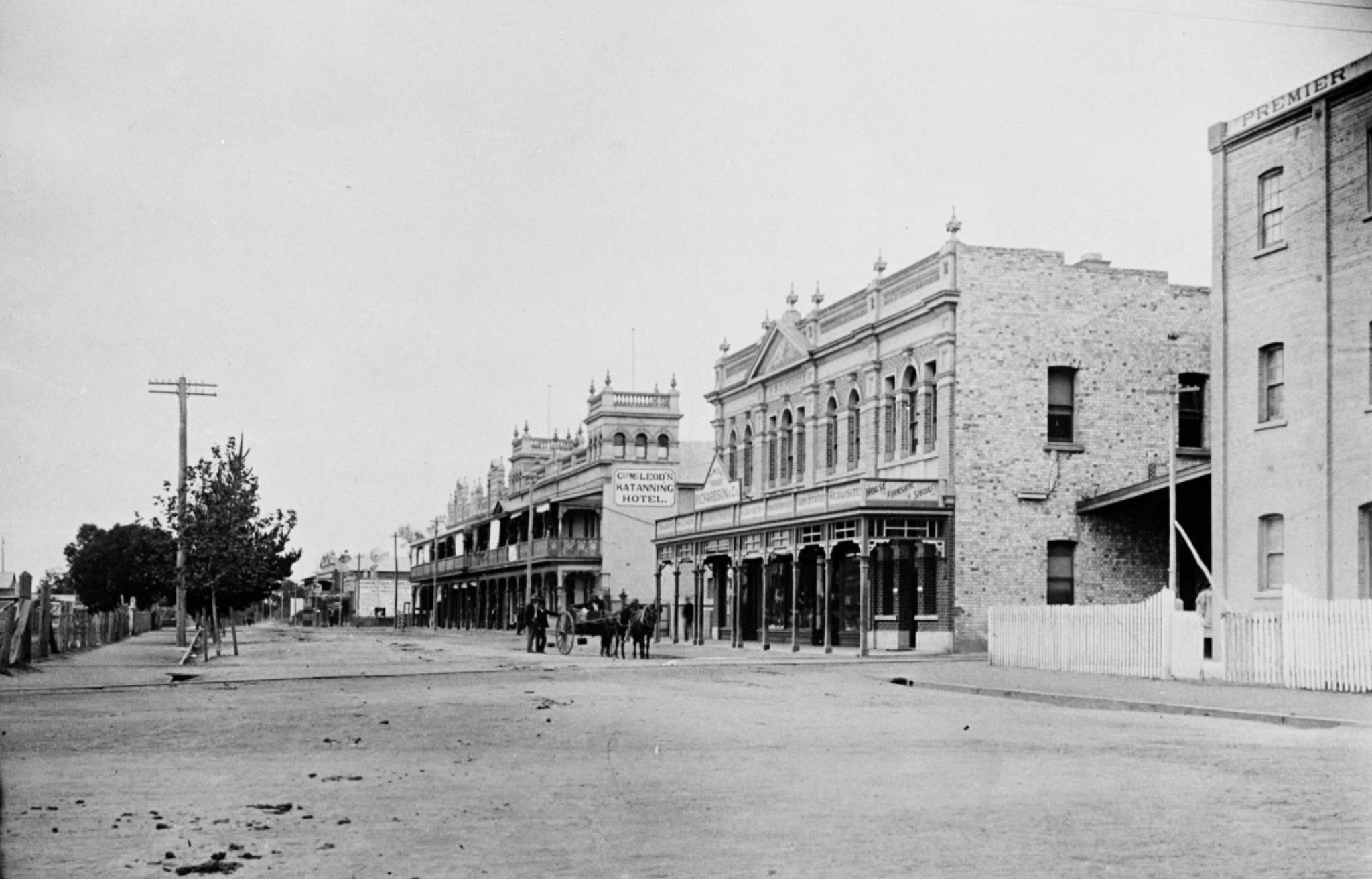
Dorris never again saw the little iron house in Ewlyamartup after her family moved to Katanning in 1904. Katanning at the time was “just a little mushroom town growing up”. Their new house in Kierle Street was half weatherboard and half iron. There were very few brick houses then. Clive Street was the main street and Austral Terrace on the other side of the railway line was a long, long street of little shops – including a jeweller, a cake shop, a chemist and a tailor.
Katanning school seemed huge and terribly frightening to Dorris, compared to the little Ewlyamartup school she loved, and the teachers were “very strict, too strict”. “Everything that we got wrong we had to come out and have the cane. I used to get the cane twice a day without fail. It never entered anyone’s heads to complain. No-one could say that Katanning school days were happy for me.” (Dorris Green, 1979)
Early one morning Dorris and the town woke to a huge commotion. “We could hear bells ringing, church bells ringing, all sorts of noise and people running around and calling out. We went outside to have a look and Austral Terrace was all in flames. The whole of the street was burning furiously.” The fire burnt all the buildings on the Terrace down in 1908 but it wasn’t too long until bigger and better two-storey shops were built. Also, a nice footpath, hitching rails for the horses and a large general store.
After five years at Katanning school Dorris had become a “bundle of nerves”. At the “end of her tether” she went to stay with her grandparents (who had followed them from South Australia). She stayed, and stayed, and stayed until she turned fourteen and she never went back to school after that.
Dorris was briefly sent to the Methodist Ladies College in Perth “to polish her off a little bit” but she wasn’t interested, got homesick and came home early. Her time there was not entirely wasted though. Here she learnt that if you wore good, well-polished shoes and good gloves it showed that you were a lady. “Oh, and a hat, you always had to wear a hat.”
Dorris returned to Katanning to help her mother at home. Every morning she would wake up at six, light the fire and get the breakfast going. Breakfast was a formal sit-down affair – bacon or liver and eggs, porridge.
She also learnt the piano and once played for Sir John Forrest. Her father was on the Roads Board and there was a special luncheon being held in Forrest’s honour in the hall. When they realised that they had no-one there to play the “God Save the King”, Dorris was quickly called on to play.
Afterwards Sir John shook her hand, patted her on the head and said what a clever little girl she was. Her impression of him was that he was kind, “rather stout, short, not very tall, with a black beard, black hair and rather a big tummy.”
After that the first money Dorris earned was playing piano at the local roller-skating rink (later Thomson Bros. Hardware) – waltz time – in the evenings. Skating was “the thing” at the time and was held in a big building with a granolithic floor, with railing all around.
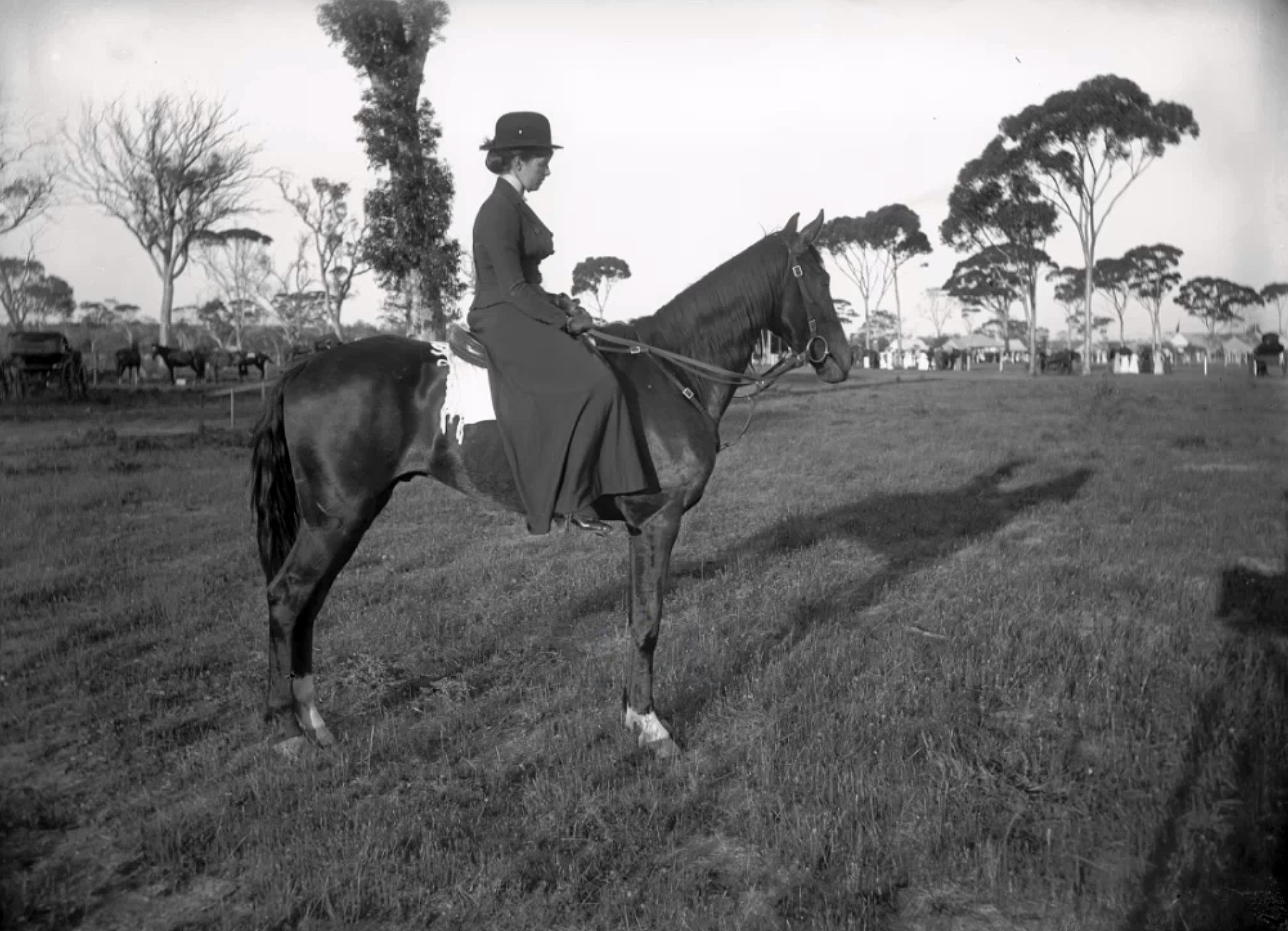
Dorris was also an accomplished rider, once winning the Ladies Hack in the Royal Perth Show. When riding she would wear a heavy divided skirt – like two big, wide legs which looked like a full skirt when standing -, a hacking jacket and an uncomfortable corset made of whalebone and laced at the back. From about the age sixteen girls started wearing corsets to give them “woman status”.
Katanning was known for some big annual balls, including the Nor’westers Ball. The Ross Anderson’s that lived out of Katanning were old Nor’westers. They had a lovely big home and plenty of servants. When their Nor’west friends would come to visit they would put on a ball. Townspeople were invited ‘by invitation’ but if they accepted they were expected to pay a guinea and stand and dance in the right place. A chalk line was drawn across the middle of the floor. On one side the Nor’westers gathered, the townspeople on the other. For the townspeople to cross the line would have been seen to overstep the mark.
Just before World War I, the Green family moved into a nice brick house with a veranda all around and fashionably big rooms. Dorris’s duties included cleaning the brass door handles, the table silver after meals and polishing the floors on her hands and knees. Dorris was scrubbing the kitchen safe when war was declared.
“I was scrubbing the kitchen safe, and the butcher came around and he said, “Do you know that England and Germany have declared war?” Goodness, war was a dreadful, terrible sounding word to me then.”
Nearly all of the boys in Katanning enlisted. It was a sad time and sometimes it would take six weeks after a boy was killed, to learn that they were gone. It would appear in the newspapers, or the local church ministers would be notified and break the news gently to the family. The girls used to still go to dances and dance with each other.
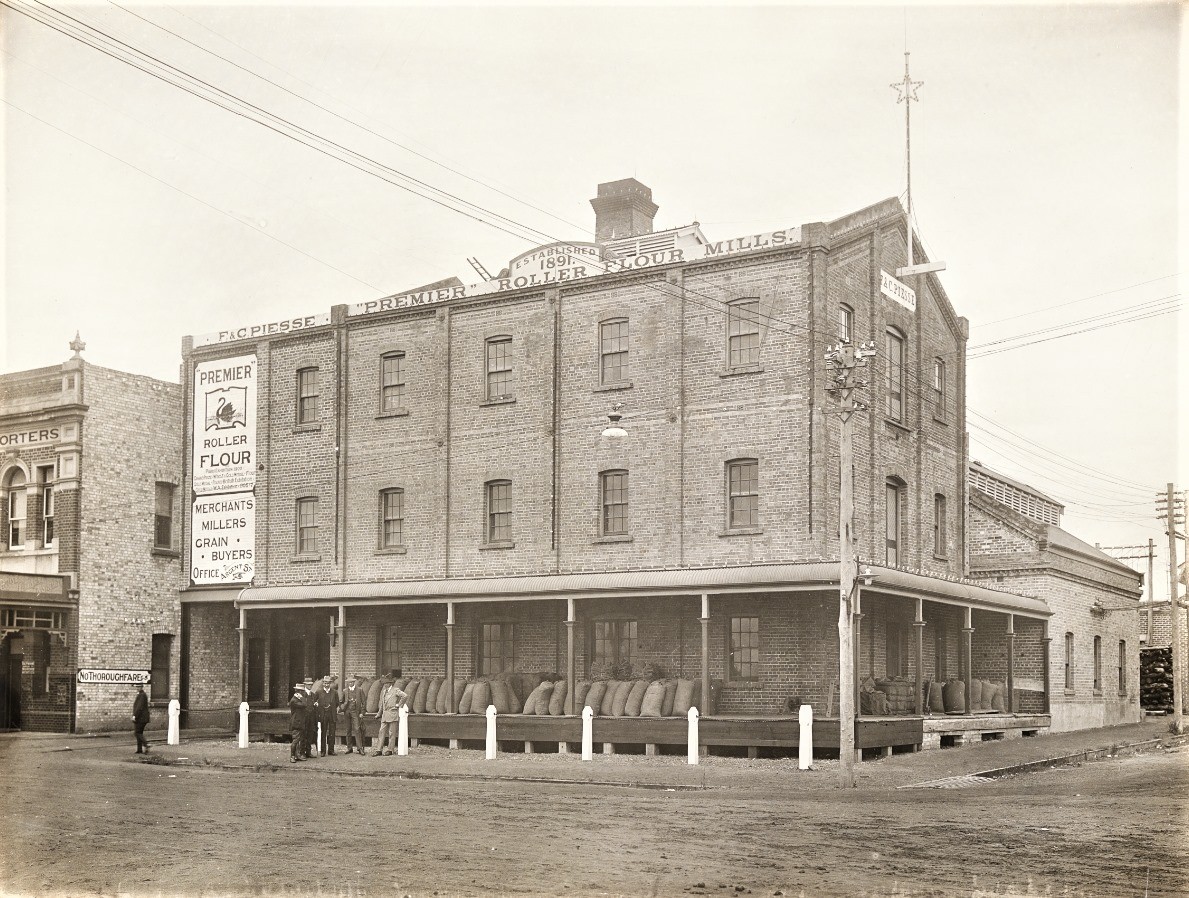
The first ball Dorris went to was a military ball when she was about sixteen. It was the first evening dress she’d ever had. Her mother was very fashion conscious and she and her daughters always wore the latest styles made by the local dressmakers. Dorris wouldn’t wear green in case she was introduced to someone as “Miss Green”. Dorris’s first formal dance was with Harold Piesse, a stout chap of 35 years from a prominent family in the district and a business associate of her father’s. Her father was proud of that.
Dorris wore her hair down her back which was the common thing to do before a girl turned twenty-one. She powdered her face, but lipstick didn’t come in until after 1919. There was no alcohol served at dances until after the war.
“A boy wouldn’t dare come near and ask you for a dance if he smelt of beer or anything. Boys were so decent, and they treated you so respectfully those days. The most that would happen would be that you might kiss them goodnight if you were very, very much in love, engaged or as good as engaged. But, you know, anything further than that, even standing at the gate for more than five minutes was unheard of.” A “date” in those days might include going to the pictures with supper to follow – mostly poached eggs on toast. The boy always paid.
When the war was over the town went mad and every soldier that came back to Katanning was given a reception in the town hall. There were invitations here, there and everywhere and being patriotic, Dorris’s family often had returned soldiers staying with them. “It wouldn’t matter if they’d murdered somebody, after they got home. As long as they’d been to war, they were good chaps.”
Dorris’ future husband Alan Howard Barber, came home in 1918. Before the war he had been her father’s teamster and lived in their house. They shared a love of music, Dorris playing the piano while Alan played the violin in the sitting room in the evenings. They played classical music as well as tommyrot (nonsense) – whatever was called for.
They really only started courting after the war although they wrote very often to each other during it. They had become great friends and on their last walk together when he was saying goodbye to her at the back gate, she couldn’t help but kiss him. “But he probably just took it the same as I would kiss any soldier that was going away, fighting for king and country and so on. Because in those days you didn’t kiss unless you really did mean it.”
On his return the couple never talked about the war or his injuries. Alan had been shot twice in France, once in the head and another in his shoulder. “He never talked about the war, none of them did, none of our friends ever did. I think it was just a terribly cold, awful page that they wanted to close up forever.”
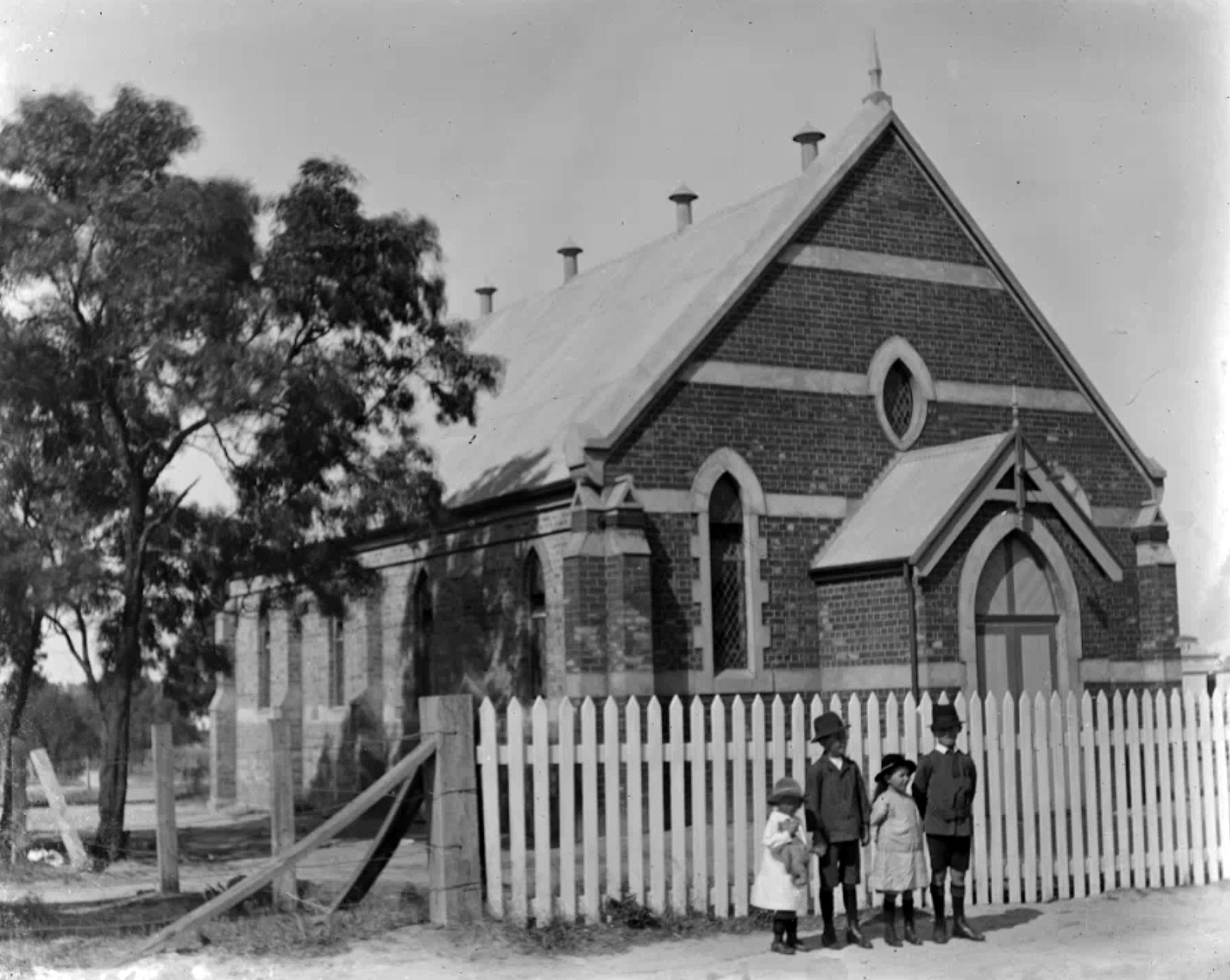
Dorris would later tease Alan that he never proposed to her properly. One day he went up to Perth to get his discharge and at the same time chose her a ruby and diamond ring – a popular style that became known as the ‘First World War engagement ring’. The marriage in Katanning of Miss Althea Dorris Green to Private Alan Barber at Wesley Church was a happy occasion.
“The bride entered the Church on her father’s arm, looking sweetly pretty in her lovely bridal frock and veil, the frock being composed of embroidered lace over silk foundation, with silver embroideries. A plain net veil was arranged in cap fashion, with a wreath of orange blossoms, and a sheaf of arum lilies carried by the bride. The bridesmaids looked extremely well in frocks of apricot Georgette and carried lovely bouquets of sweet peas.” (Great Southern Herald, Katanning 1919)
As the bride left the Church, Miss Tuppy Thompson presented Dorris with a horseshoe decorated with the battalion colours of the bridegroom. Wedding presents were both many and costly, including several cheques, as well as numerous wires from Eastern and WA friends.

CLICK HERE
to listen to the
original interview
Source – [Interview with Althea Dorris Barber] [sound recording]
[interviewed by Heather Wrigley]Barber, Althea Dorris, 1896-1990.Oral History | 1979-1980.
Available at Online (Call number: OH398
ABC Perth The West Australian ABC Great Southern
Great Southern Herald Outback Family History Familyhistory WA – FHWA
From Facebook:
From Anita Dixon
An interesting story. I think it was in 1951 that my family with four other families who came out of war-torn Europe, were sent to Ewlyamartup. The families were given tents on a dirt floor to live in. My father and the other men worked on the railway siding that was there. We lived there until the debt was paid back to the Australian Government for bringing us out to Australia.
There were no handouts from the Government back then. Can you imagine putting refugees in tents with a dirt floor, no running water, that would come in a barrel once a week. The refugees that come here illegally had all the do-gooders fighting for everything for them and demanding everything.
My family and all the ones that came here after the WW2 were invited to this country by the Australian Government. We were made to live in the most primitive conditions. We never got any financial help at all, and there wasn’t anyone fighting for our rights either.
Us reffos built this Country. We brought in culinary delights that Australian had never had before, stylish clothing, and so much more. The majority of people in Australia, are completely unaware of the way we were treated when we came here, and I don’t think they really care.
From Ken Hockey
We lived in Nyabing (37 miles from Katanning) for one year in 1965. We went there as a “big adventure.” Dad built a house from scratch (lugged EVERYTHING from salvage yards around Fremantle 200 miles to Nyabing on a trailer behind his old Vauxhall); then we went broke and came home.
But it WAS an experience. Katanning was the “big smoke”. I only remember going there a couple of times, but Dad was always there getting parts for the ancient school bus he ran that always broke down.
Not much happened in Nyabing. Steam trains would arrive to shunt wagons that had been left there to be unloaded, and we would go and watch. The engine driver yelled out to me to go and “change the points”; and then took us for a ride as he hooked up – a huge treat for us. The only thing he said was “Sit there” (near tender), as EVERYTHING is hot!!!!” (1965 OH&S brief).
There was a big river/waterhole nearby, and one day a circus stopped and all the kids went down to see the animals have a drink. They had elephants and they had a bath in the water. One of the kids said, “I can’t wait to see the circus!!!!” A bloke said that they “just stopped for an overnight water/camp. There’s no show here, it is in Katanning.” Kids were heartbroken; but Nyabing was too small at that time – about ten houses, one pub, general store, hall……
Later that day there was a bloke driving a clown with a megaphone through town in an open Landrover. He announced they would do a show in “Treasure’s front yard” (a local farmer with a huge shed in town with a very big forecourt.) That night they put on a show for us. No elephants or large animals, as too hard to set up, but some monkeys/ponies/magic and clowns and acrobats. We kids thought it was like Las Vegas. Wonderful. I was seven, and I had never seen anything like it. My sister was four (she doesn’t remember it; but she was there and loved it.) We all gave them a few coins to try and help feed the animals, but no one had much money back then.
Those people had been touring around the bush with all those vehicles, animals and the like. It was a very hard life, as the roads out there were savage and unforgiving. That night in Nyabing was meant to be a “night off” for them; but they went out of their way to “put on a show” for barely a couple of dozen very delighted kids.
Thanks for posting and reminding me of times like that. Life was pretty hard down there – it made you appreciate “special” things when they happened.
From Daphne Kerin
Such a good article to read – wish I had listened to or remembered more of her stories when I boarded with her. She was a very interesting lady. So nice to hear Mrs Barber’s voice again on the audio version of her story – a very well spoken lady. I boarded with Althea Dorris Barber in South Perth from 1968 for a couple of years . Coincidentally , her grandfather owned a farm which is now part of our farm on Warren Road ( I think his name was Green) and there is still some evidence of the driveway and the house.
From Loraine Morgan
Such a lovely story. My cousins were born and grew up in Katanning. We often used to go there for the weekend. Aunty and Uncle lived in Blantyre Street for many years. I always spent my school holidays there as a girl. A lovely, friendly community. Going back to the forties. During WW2, my dad landed a plane on their property, “just called in,” he said, “for a cuppa.”
From Dione Castlehow
My family is from there. I’m related to Henry Thompson. He was my GGGfather. I don’t have much information unfortunately. I know he married Gertrude Olive Dick. They had three daughters Gwendoline, Leslie and Janice (my mother). Also, a son Stuart. If anybody remembers their name or anything about them, please let me know. My mother passed away a long time ago, as did the others.
Vera Flett
I was born in Katanning but left around July 1948. Matron Ross brought me and some of my siblings into this world. Six surviving siblings of a family of nine made a trip back to Katanning two years ago. My sister, Joan and brother Doug told us all about their childhood days.