
Cottage Hospital
A COTTAGE HOSPITAL
DEPUTATION TO THE COLONIAL SECRETARY.
MR. COLEBATCH SYMPATHETIC.
West Australian
2 August 1916
A deputation from Woodanilling waited upon the Colonial Secretary, Mr. Colebatch {1}, yesterday to urge that government assistance should be extended to the townspeople in connection with their district nursing and a proposed cottage hospital scheme. The deputation consisted of Mr. W. Patterson, chairman of the Woodanilling Roads Board, and Messrs. E. Bell and J. Pittelkow, a member, and the secretary of that board respectively. They were accompanied by Mr. S. Stubbs, M.L.A., the member for the district, and Mr. Thomson, M.L.A.
In stressing their claims for assistance, both the delegates from Woodanilling and the two Parliamentarians with them explained the existing unsatisfactory state of affairs at the township. As the result of representations two years ago, the Government granted a subsidy of £50. and the townspeople subscribed £100 for the provision of a nurse. The district had grown so rapidly during the last few years, despite the fact that it was scattered, that the necessity for proper housing of the nurse and her patients had become a matter of first importance.
It was intended, in addition to the cottage hospital, to erect a building which should provide ample accommodation for the nurse. It had been decided to raise about £300 within the next few months, and they desired the Government to subsidise their collections. The Woodanilling residents did not want the Government, particularly in view of the financial situation, to shoulder the whole expense, but were determined to bear their share.
If the Government could grant a £ for £ subsidy the banks would lend further assistance and a start would be made with the work. In the past the district had not worried the Government for requests and, apart from the small roads board subsidy, their requests had been nil. In addition to raising funds for the cottage hospital and nurses’ quarters the settlers were prepared to cart wood and water to the claypit and to cart in the bricks to the site.
The Colonial Secretary, in the course of his reply, said that he was pleased to hear that the good work which had been done in connection with the nursing scheme was appreciated by the residents, and he would have to ask them to do all in their power to keep the scheme in operation under the existing subsidy from the Government.
He was in the unfortunate position that the request had been refused by his predecessor in office, and he felt bound to say that the reasons advanced had been sound. Mr. Drew had not denied the necessity for the work but had pointed out that there was a hospital at Katanning, and that there were many other parts of the State which were in a worse position than theirs. It was purely a matter of finance and the financial, position of the State was about as bad as it could be, principally because the proper functions of government had in the past been made subservient to operations which should not rightly come within the scope of Government concern.
He intended to do everything possible to see that a great deal more was done in the country districts in the direction of attending to the sick and educating the children. Those districts which were are prepared to assist themselves should have the best attention. In other places the Government had borne the whole of the expenses and in some instances, they had not been prudent in the expenditure.
There was a glaring instance in Northam. An unfortunate man who had been placed in a cell when suffering from the effects of drink, had knocked his head on the wall. The doctor had sent down an urgent recommendation that an expenditure of £14 or £15 should be authorised to provide a padded cell. Instead of doing that, it was decided to erect a mental ward attached to the hospital, at a cost of £900. That ward had been completed for two years now. It had never had a stick of furniture in it, an orderly had now been appointed for it, and its doors had not been opened for a patient!
The £900 had been absolutely wasted. However, he hoped that the Woodanilling residents would do the best they could with the present Government subsidy for the time being.
Mr. Stubbs: “I take it that preference will be given to people like those at Woodanilling who are willing to keep themselves, when the Government are able to extend further assistance.”
The Colonial Secretary: “Yes, that will be so.”
Woodanilling Cottage Hospital.
OPENED BY MINISTER FOR LANDS
Southern Districts Advocate
11 September 1918 – P3
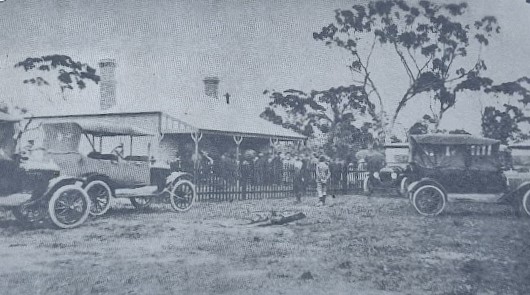
Opening of the Woodanilling Cottage Hospital
Notwithstanding unfavourable weather there was a large attendance present at the cottage hospital on Saturday afternoon last when the formal opening of that institution took place. With the idea of giving the enterprise a good send-off upon its errand of mercy, the committee secured the attendance of quite an imposing array of parliamentary representatives with the Minister for Lands as chief to whom was entrusted the duty of officially declaring the hospital open.
The chairman and members of the road board, and other local bodies were represented in force, beside a number of visitors from Katanning and other centres, together with a representative attendance of local people when Mr. H. Kippen, chairman of the health board, asked the people for their attention.
He briefly traversed the history of the enterprise from its inception, and spoke of the pleasure it gave him to see so many distinguished visitors present on that occasion. “They had no less than ten members of parliament present upon each of whom he was going to call for a short speech. Three minute speeches were to be the order.”
The Minister for Lands, Hon. F. E. S. Willmott, expressed his pleasure at being present. It was his second visit. In company with some members he had seen some of the good land, the excellent stock, and comfortable homes of some of the people through the courtesy of the chairman and members of the local road board who had motored over the country. He complimented the people of Woodanilling upon their enterprise, in establishing such a fine institution in their midst. The fact that they had built it first and asked for a subsidy afterwards indicated a progressive spirit. He had seen many evidences of that spirit during his visit. They might rest assured that, the promise of the Honourable, the Colonial Secretary would be fulfilled. He would give his support to the grant when the estimates were brought down. He could not refrain from a word of praise to the contractor, Mr. A. Thomson, upon the excellence of the work displayed in the building. He hoped the institution would prove of the greatest benefit in their midst.
Politics were debarred in a three minute speech, but he would like to say the Government had emerged victoriously from a censure motion with a substantial majority, and it would go on with its policy of supporting production and repatriation. He had great pleasure in declaring the building open to enter upon its mission of mercy.
The member for the district, Mr. S. Stubbs followed, and congratulated the people upon the realisation of their hopes in the possession of such a necessary and excellent institution. He would give the authorities no peace till the grant had materialised.
There then spoke in succession, and in support, Hon. C. McKenzie, Hon. J. A. Greig, and G. J. G. Miles, M’s.L.C., and Messrs. F. W. Teesdale, H. G. Hickmott, Brown, J. A. Davies, and A. Thomson, M’s.L.A. At the close of the speeches the public took the opportunity of looking through the hospital where the nurse in charge exhibited the appointments of the institution.
THE SALE OF GIFTS.
The sale of gifts in connection with the official opening of the Cottage Hospital, proved very successful, and the results of the day reflected the highest credit on all concerned. A large variety of gifts were donated, including sheep, pigs, poultry, a horse, vegetables, bacon, chaff, etc. The auctioneer, Mr. E. C. Leggoe, had a hard task at times, but with a high reputation to uphold, succeeded in extracting some fancy prices. The task of the auctioneer was not made any easier by the unthoughtful action of several of our leading residents (embryo politicians) in engaging the visiting parliamentarians in political discussions.
Too much praise cannot be given the ladies for a very delectable high tea served in the evening. Everything used or consumed was contributed by them, and nearly 200 people availed themselves of the excellent meal provided. The ladies also provided afternoon tea for the visitors, and this little attention was heartily appreciated.
In between dances at night the sale was continued, and every item was disposed of. A half-sovereign was sold for 31s, and some war souvenirs contributed by Nurse Hitch, formerly the local district nurse, realised £3 10s 6d. Raffles were also conducted, and not many local people went home without being ‘skinned out,’ though the visitors escaped lightly.
In spite of pessimistic opposition the secretary set £100 as his target, and this sum was exceeded by £6. The total expenses will not exceed £3.
Woodanilling Notes.
CIVIC RECEPTION.(Contributed)
Southern Districts Advocate
18 September 1918 – P3
The chairman of the Woodanilling Road Board, Mr. E. R. Bell, entertained visiting members of parliament at the Woodanilling Hotel on Sunday evening, the 8th inst.
Mr F. Garter, in proposing the “Visitors” paid a tribute to the services rendered the district by the member for the district, Mr. S. Stubbs. “As one who had taken up a lot of poison country. Mr. Carter said he welcomed the opportunity to express, on behalf of his neighbours and himself, thanks for the practical and sympathetic treatment received from the Minister for Lands. He was sure the visits to country districts by metropolitan members would have a beneficial effect.”
Mr. E. Dival supported Mr. Carter’s remarks. “He had been previously opposed to Mr Stubbs, but was bound now to acknowledge the great work done for the district by that gentleman.”
In acknowledging the toast the Minister for Lands said “he would never forget the extreme kindness and consideration shown him by the people of Woodanilling. He had now paid two visits to the district while practically an invalid. He has seen the worst and best of the district and was satisfied it was one of the best in the State for mixed farming.
“He had seen some of their sheep, and, as a practical man himself, he had no hesitation in saying they had the best class of sheep in the State. He had recently been discussing wool with appraisers, who had asserted that some of the very best wool had come from Woodanilling and surrounding districts. After seeing the sheep himself he could appreciate the appraiser’s opinion of the character of the wool.”
Mr. Stubbs expressed his thanks to the visitors for making the trip. “He was particularly anxious to induce as many members as possible to visit the country districts, so that when a Bill affecting the country was before Parliament they would then possess a more intimate knowledge of their subject. At the present a number of members were lamentably ignorant of the conditions obtaining in the country districts, and it was his desire to remedy that as much as possible.
“In return for their great kindness and hospitality shown to him on all occasions, he could not say too much, and every possible act he could do in return would be a pleasure to him.”
Hons, G. Miles, and J. Greig, M’s.L.C., and Messrs Brown, H. Hickmott. and Davies; M’s.L.A. also responded, and emphasised the education they had received by their visit, and their appreciation of the extreme kindness and hospitality extended to them during their stay.